
By Christine Lampert
Based on an article by Christine Lampert, Architect, AIA, NCARB
A Coastal Dream in Early California
Halfway between Los Angeles and San Diego, a remarkable chapter of California history began along the Pacific coastline. In 1906, the Goldschmidt family — German Jewish immigrants and successful vintners in Los Angeles — purchased 12,000 acres of land with the Forster family. Their vision was ambitious: create thriving vineyards for their growing wine business.
The coastal property that would later become part of San Clemente seemed ideal for grape cultivation. However, history intervened. When Prohibition took effect in the United States from 1920 to 1933, the production and sale of alcohol became illegal, forcing the Goldschmidts to abandon their winemaking plans.
As circumstances changed, the partnership between the Goldschmidts and the Forsters dissolved. The Goldschmidts retained the prized oceanfront land, while the Forsters kept the inland ranch property.
The Birth of San Clemente
In 1924, the Goldschmidts sold a 2,000-acre portion of their land to Ole Hanson and his partners. That land would soon become San Clemente, famously promoted as the “Spanish Village by the Sea.”
Rather than leaving entirely, the Goldschmidts chose to remain connected to the emerging community. They purchased one of the highest lots in town, offering sweeping views of the Pacific Ocean.
To design their dream residence, they selected one of the most respected architects of the era: Paul Revere Williams.
Paul Williams: Breaking Barriers Through Architecture
Paul Revere Williams was far more than a talented architect — he was a pioneering figure in American design history.
Born in 1894, Williams studied architecture at the University of Southern California before becoming one of the first prominent African American architects in the United States. He earned his California architecture license in 1921 and went on to design more than 3,000 buildings during a career spanning over five decades.
Williams became known as “Architect to the Stars” because of his work for wealthy Hollywood clients and influential figures across Los Angeles. His portfolio included elegant mansions, luxury residences, and major commercial projects. Among his most recognized works was his contribution to the iconic Theme Building at Los Angeles International Airport (LAX).
Despite his success, Williams faced significant racial discrimination throughout his life. Ironically, while he designed homes in prestigious neighborhoods, he was often barred from living in those same communities because he was Black.
The Goldschmidt House: A Hidden Gem
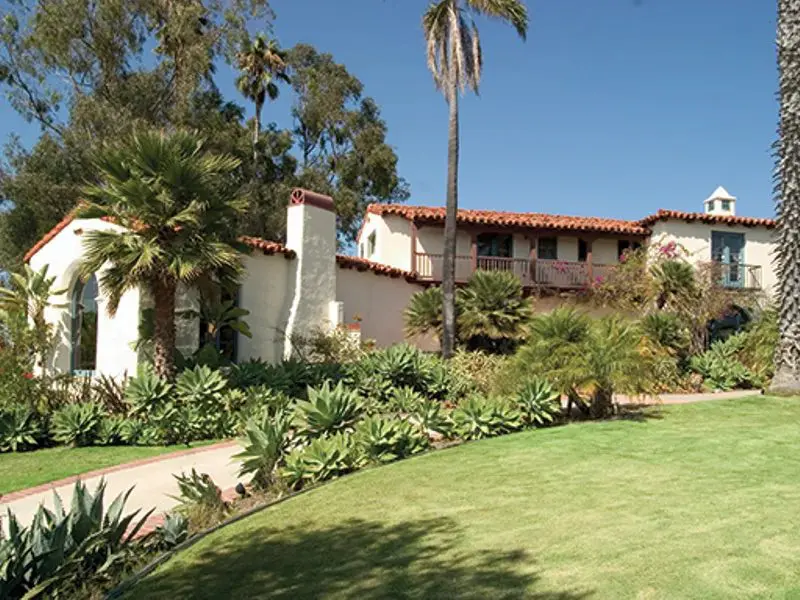
The Goldschmidt House stands as a beautiful example of Paul Williams’ signature architectural style.
Designed in the Spanish Colonial Revival style, the home reflected the romantic Mediterranean influences popular in Southern California during the 1920s. The property also carried a touch of mystery and glamour: hidden inside was a secret room that concealed a Prohibition-era bar.
The residence earned the nickname “Casa Tres Vistas” because it offered ocean views in three directions.
Located at 243 Avenida La Cuesta, the house occupies nearly three-quarters of an acre and spans approximately 5,000 square feet. Today, the historic property is reportedly undergoing careful restoration by its current owners.
A Complex Legacy
The story of the Goldschmidt House also highlights the contradictions of early Southern California society.
At the same time the Goldschmidts and Paul Williams helped shape San Clemente’s cultural and architectural identity, discriminatory housing restrictions were embedded into local property deeds. These restrictions prohibited property sales to several ethnic groups, including Jews and African Americans.
The irony is impossible to ignore: the Goldschmidts were Jewish, and Williams was African American — yet both played vital roles in creating one of San Clemente’s architectural treasures.
While these aspects of history are uncomfortable, they remain essential to understanding the social realities of the period and the resilience of those who overcame them.
Preserving an Important Piece of History
Today, the Goldschmidt House represents more than architectural beauty. It stands as a symbol of creativity, perseverance, and the complicated history of race and identity in early California.
Paul Williams’ legacy continues to inspire architects and historians alike, while the Goldschmidt House remains a lasting reminder of the people who helped shape the character of San Clemente.
There are many more Virgil Westbrook buildings throughout San Clemente, with over 30 documented in official city historic records.